Mitigation Banking & Ecological Restoration
Restoring Natural Systems. Supporting Responsible Development.
Mitigation banking was developed as a practical and science-based solution to help balance land development with the protection, restoration, and long-term management of wetlands and other valuable ecological systems. As growth increased across the United States—particularly in states like Florida—impacts to wetlands, wildlife habitat, and surface waters became more common, creating the need for a structured and reliable approach to offset unavoidable environmental impacts while improving long-term ecological outcomes.
At Gold Coast Land Management, we provide comprehensive land management and environmental support services for mitigation banks, restoration projects, and conservation properties throughout Florida. Our experience spans multiple phases of mitigation and restoration projects, including property evaluation, restoration support, vegetation management, prescribed fire, fuel reduction, long-term stewardship, and ecological maintenance. We work alongside landowners, environmental consultants, mitigation providers, developers, regulatory agencies, and project stakeholders to help support ecological objectives, operational functionality, regulatory compliance, and long-term project success.
Our approach focuses on practical, field-driven solutions tailored to each property’s unique conditions, restoration goals, and management requirements.
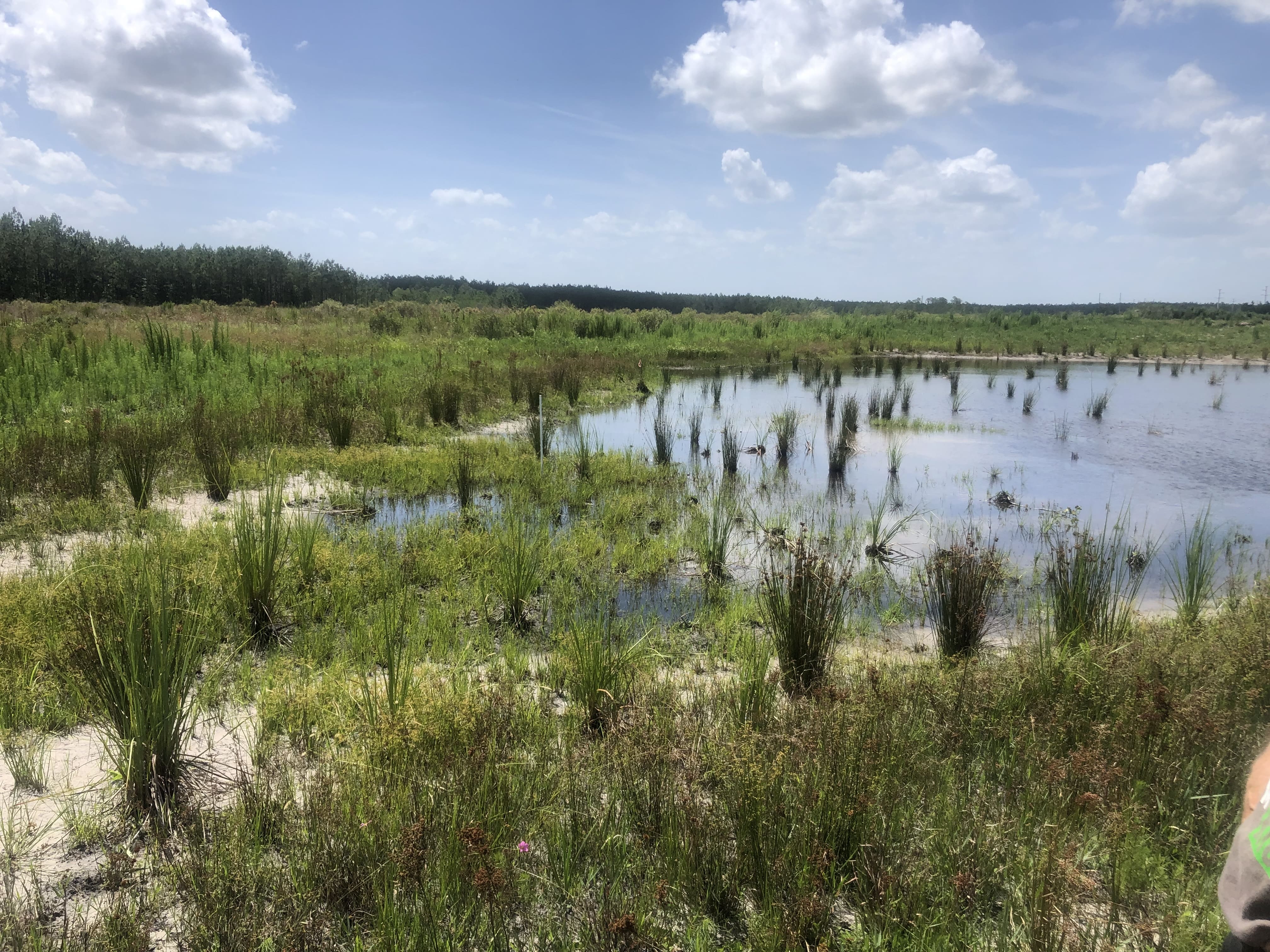
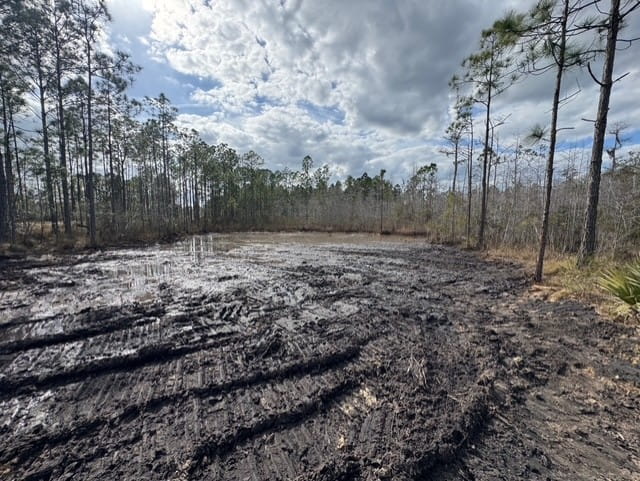
What is Mitigation Banking?
Mitigation banking is a process where wetlands, uplands, and other ecological systems are restored, enhanced, preserved, or created to offset unavoidable environmental impacts permitted elsewhere.
Mitigation banks are typically large-scale, professionally planned restoration, enhancement, or preservation projects where ecological improvements are implemented in advance to offset future permitted impacts elsewhere.
These projects are designed to improve:
- Wetland function
- Water quality
- Hydrology
- Wildlife habitat
- Ecological connectivity
- Long-term ecosystem resilience
These restoration activities generate mitigation “credits” that may be used to offset impacts associated with permitted development and infrastructure projects.
The Foundation of Mitigation Banking
The modern mitigation banking system developed from the federal goal of “no net loss” of wetlands established under the Clean Water Act.
Under this framework:
- Impacts to wetlands and surface waters should first be avoided where practical
- Remaining impacts should be minimized
- Unavoidable impacts must then be offset through compensatory mitigation
This approach created a more consistent and environmentally focused system for balancing development with natural resource protection.
How Mitigation Banking Evolved
Early mitigation efforts were often performed on a project-by-project basis and frequently resulted in fragmented restoration efforts with inconsistent ecological success and limited long-term sustainability.
To improve long-term outcomes, regulatory agencies—including:
- U.S. Army Corps of Engineers (USACE)
- U.S. Environmental Protection Agency (EPA)
- Florida Department of Environmental Protection (FDEP)
- Florida Water Management Districts
advanced the concept of mitigation banking as a larger-scale, professionally managed restoration approach.
Unlike smaller isolated mitigation sites, mitigation banks are typically restored, monitored, and managed under long-term regulatory oversight with measurable ecological performance standards and management requirements.
This evolution created a more predictable and science-based system that:
- Improves ecological outcomes
- Supports regional conservation goals
- Reduces habitat fragmentation
- Enhances long-term ecological resilience
- Provides a more efficient and streamlined permitting pathway for development projects
Why Mitigation Banking Matters in Florida
Florida relies heavily on mitigation banking due to:
- Extensive wetland systems
- Rapid population growth and development
- Complex hydrology and surface water systems
- Significant wildlife and habitat resources
- Stringent environmental permitting requirements
Mitigation banking helps restore and preserve large connected ecological systems while allowing responsible development to proceed in appropriate areas.
Agencies such as:
- Florida Department of Environmental Protection (FDEP)
- St. Johns River Water Management District (SJRWMD)
- South Florida Water Management District (SFWMD)
- Southwest Florida Water Management District (SWFWMD)
- U.S. Army Corps of Engineers (USACE)
participate in the regulation and oversight of mitigation banking projects to help ensure long-term ecological success and compliance.
For landowners and developers, mitigation banking often provides a more predictable and streamlined path to satisfy permitting requirements.
For the environment, it supports larger-scale, professionally managed restoration systems with measurable long-term ecological benefits.
Purpose & Benefits of Mitigation Banking
The primary purpose of mitigation banking is to restore, enhance, preserve, and maintain ecological systems while supporting responsible land use and infrastructure development.
Mitigation banking may provide benefits such as:
- Restoration of degraded wetlands and uplands
- Improved water quality and hydrology
- Enhanced wildlife habitat and biodiversity
- Increased ecological connectivity
- Reduction in habitat fragmentation
- Long-term environmental stewardship and monitoring
- Improved resilience of natural systems
Because mitigation banks are often larger, professionally managed systems, they frequently provide greater ecological value and long-term sustainability than smaller isolated mitigation projects.
Field Experience & Active Management
Gold Coast Land Management has experience supporting active management operations on mitigation banks and restoration properties throughout Florida.
Our field experience includes work associated with:
- Prescribed fire implementation
- Fuel reduction and wildfire mitigation
- Invasive vegetation management
- Mechanical vegetation treatment
- Forestry mulching and roller chopping
- Access and fire line maintenance
- Habitat management and restoration support
- Long-term land stewardship activities
- Monitoring support activities
- Photo documentation and field reporting support
- Drone reconnaissance and site documentation
- GIS and mapping support
We understand the operational challenges associated with managing large-scale conservation and restoration properties.
Agency Coordination & Working Relationships
Gold Coast Land Management has experience working collaboratively with environmental consultants, mitigation providers, landowners, regulatory agencies, and Florida’s water management districts.
Our team understands the importance of:
- Communication
- Coordination
- Responsiveness
- Active management
- Operational expectations
- Regulatory compliance
- Long-term stewardship
We maintain productive working relationships with project stakeholders throughout restoration and mitigation projects.
Mitigation Bank Management & Stewardship
Successful mitigation banking requires long-term management, maintenance, monitoring, and adaptive stewardship.
Ongoing management activities may include:
- Prescribed fire implementation
- Fuel reduction and wildfire mitigation
- Invasive and nuisance vegetation control
- Native vegetation establishment and maintenance
- Hydrologic management support
- Vegetation monitoring and maintenance
- Fence and access maintenance
- Ecological enhancement activities
- Long-term land stewardship and monitoring support
Proper management is critical to maintaining ecological function, wildfire resilience, habitat quality, and regulatory performance standards over time.
Prescribed Fire & Habitat Management
Many mitigation bank habitats are fire-dependent ecosystems that require periodic fire to maintain ecological function and habitat quality.
Prescribed fire may be used to:
- Reduce hazardous fuel accumulation
- Promote native vegetation
- Improve wildlife habitat
- Reduce hardwood encroachment
- Support restoration objectives
- Maintain fire-adapted plant communities
Gold Coast Land Management integrates prescribed fire into broader restoration and mitigation management strategies designed to improve ecological health, wildfire resilience, and long-term sustainability.
Integrated Vegetation & Fuel Management
Not all restoration areas are immediately suitable for prescribed fire.
In some situations, mechanical treatment may be necessary prior to burning to improve site conditions and reduce excessive fuel accumulation.
Gold Coast Land Management provides integrated vegetation and fuel management services including:
- Forestry mulching
- Roller chopping
- Mechanical fuel reduction
- Selective vegetation management
- Fire line installation and maintenance
- Invasive vegetation control
- Access and maintenance corridor improvement
These services help support restoration objectives, wildfire mitigation, habitat management, and long-term ecological maintenance.
Environmental Planning & Restoration Strategy
Successful mitigation and restoration projects require balancing:
- Ecological goals
- Regulatory requirements
- Site conditions
- Hydrology
- Long-term maintenance needs
- Operational feasibility
Our approach focuses on practical, field-based implementation strategies that support:
- Ecological function
- Long-term sustainability
- Regulatory compliance
- Restoration performance objectives
We understand that successful mitigation banking requires more than planning—it requires active field management, coordination, monitoring support, and long-term stewardship.
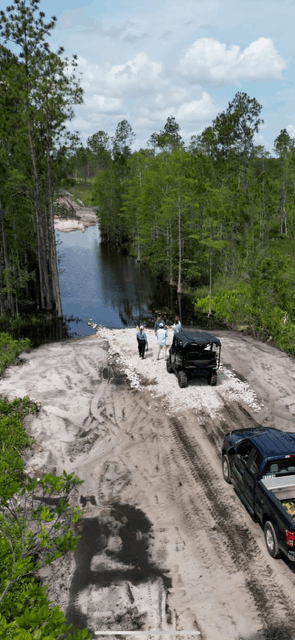
Our Approach
At Gold Coast Land Management, we support mitigation banking and ecological restoration projects through practical land management solutions tailored to each property’s needs and long-term objectives.
We regularly coordinate and work alongside:
- Environmental consultants
- Mitigation providers
- Landowners
- Regulatory agencies
- Florida water management districts
- Project stakeholders and restoration teams
to help support ecological objectives, operational functionality, compliance requirements, and long-term stewardship goals.
Our work may include:
- Restoration support and implementation
- Prescribed fire and fuel management
- Vegetation management and invasive control
- Forestry mulching and roller chopping
- Erosion and turbidity control, including silt fence installation
- Seeding, mulching, and hydroseeding
- Long-term stewardship and maintenance
- Access management and fire line maintenance
- Coordination with environmental professionals and project teams
- Practical field support for mitigation and restoration activities
- Monitoring and site maintenance support
- Drone and GIS-based site documentation support
Whether supporting habitat restoration, implementing active land management strategies, reducing wildfire risk, or assisting with long-term ecological maintenance, Gold Coast Land Management is committed to helping improve ecological function, sustainability, and resilience across Florida’s natural systems.
Long-Term Stewardship Matters
Mitigation banking is not simply a one-time restoration project—it requires ongoing management, maintenance, monitoring, and adaptive stewardship over time. Long-term success depends on active management practices that maintain:
At Gold Coast Land Management, we understand that successful restoration requires continued field implementation—not just planning.
Get Started
Mitigation banking and ecological restoration projects require thoughtful planning, active management, and long-term stewardship. Whether you are managing a mitigation bank, conservation property, restoration project, or environmentally sensitive land, Gold Coast Land Management can help support your ecological and land management objectives.
Call or Text:(386) 956-8540
Request a Consultation